
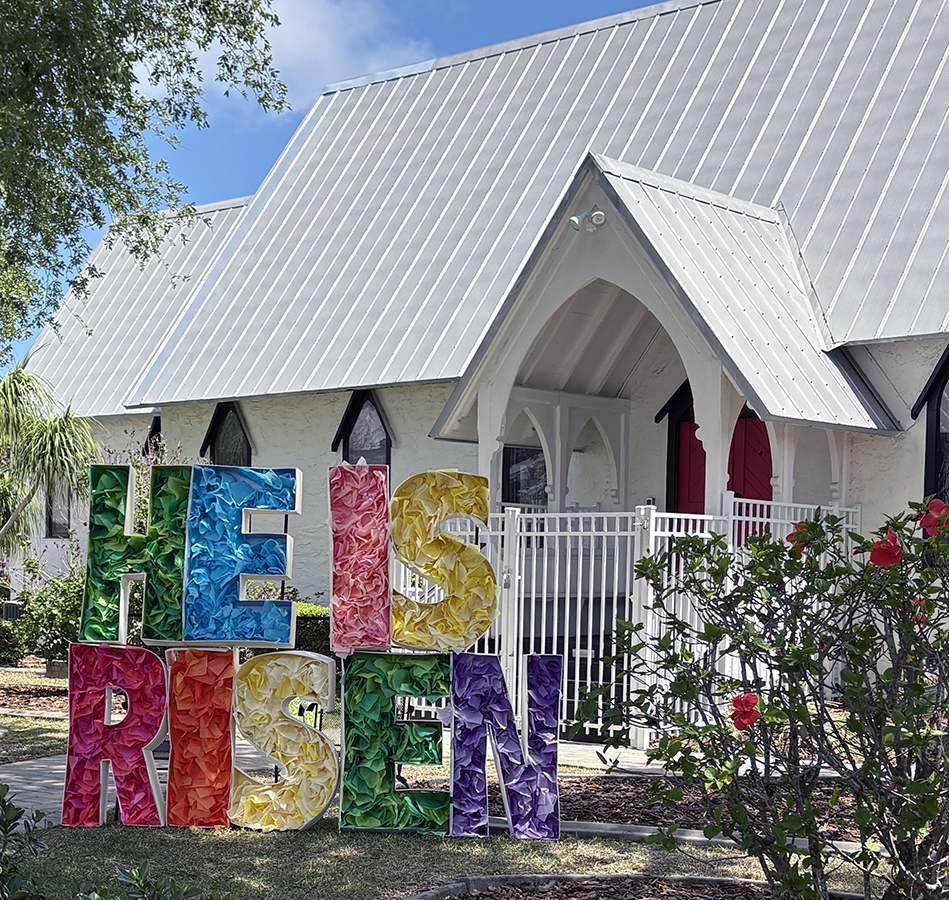
The Easter Vigil is always a refreshing service after the Holy Week services that bring many to deep thought, generally with anguish and tears. It’s difficult for me to think about anyone treating another person with such disrespect and hatred, especially when that person is our Lord and Savior.
When we read the Passion Gospel (Luke 22:39-71, 23:1-56) on Palm Sunday, I shudder to think “who would I be in this crowd.” Would I be one of those who are shouting “Away with this fellow! Release Barabbas for us!” or would I shout, “Crucify Him.” Maybe I would be the Servant Girl speaking about Peter with disdain when I say, “This man also was with him.” Perhaps I would be Peter who denied the Lord three times, even though he swore he would not deny Jesus.
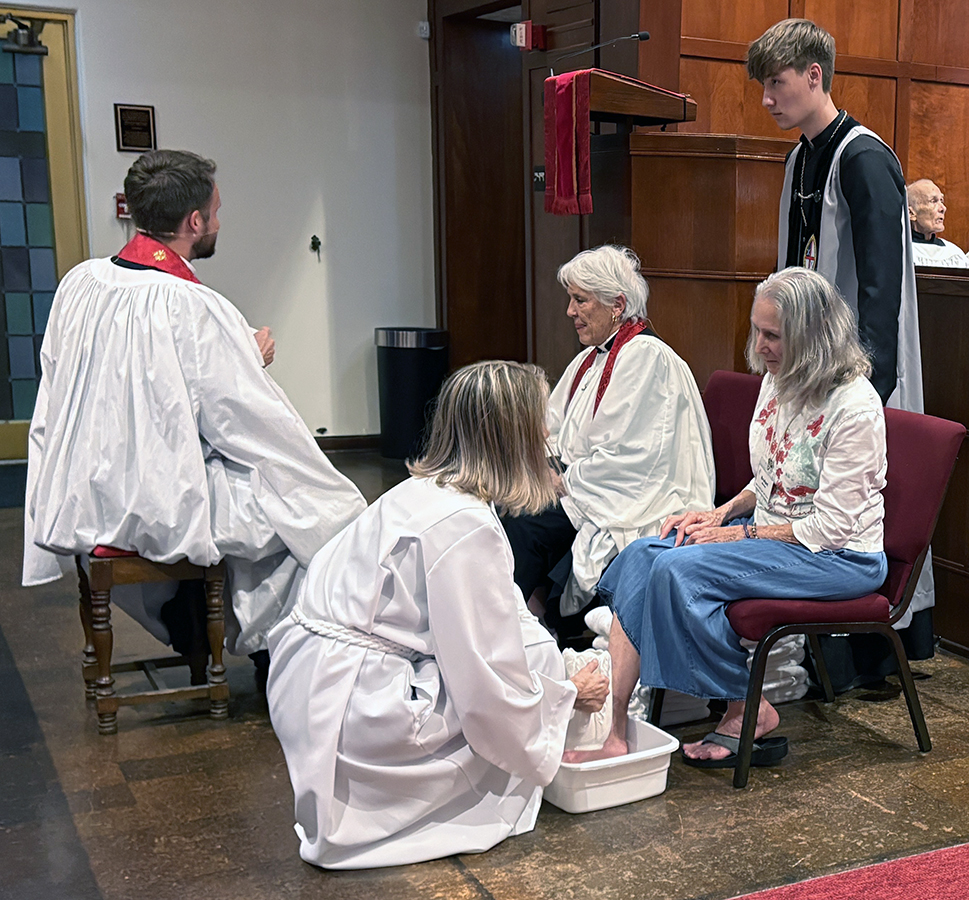
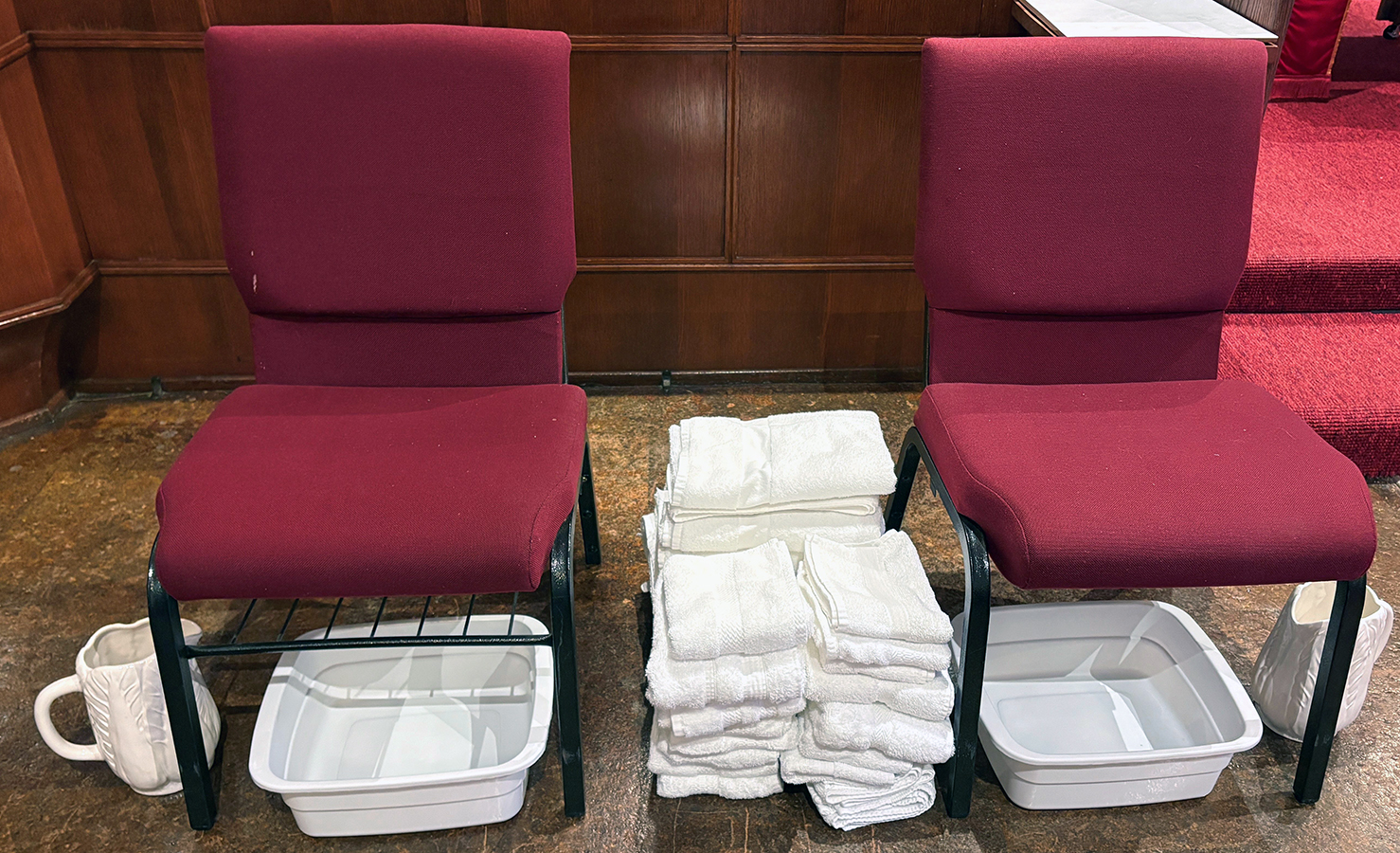
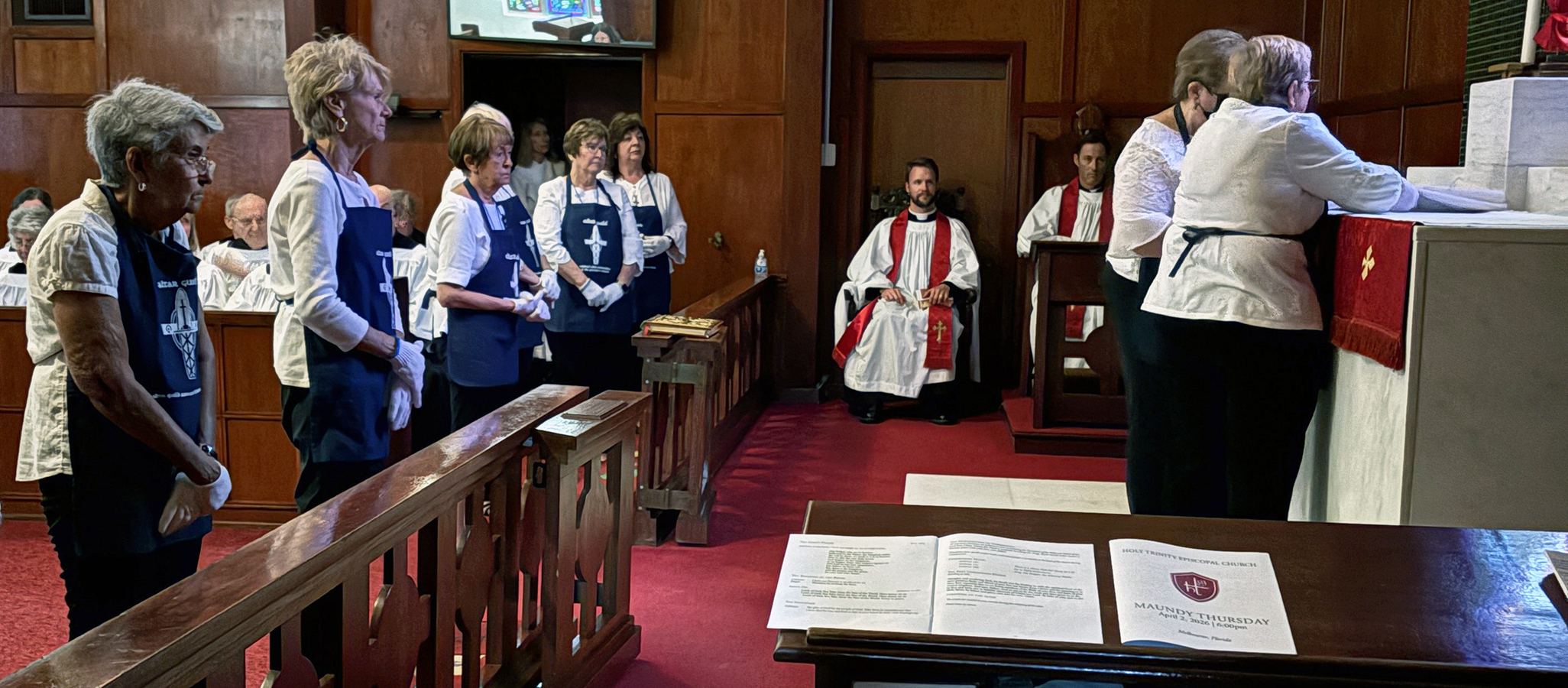
As Holy Week progresses, we come to Maundy Thursday, where the altar guild plays a big part. We bake bread for Eucharist, and we set up chairs, bowls, pitchers, and towels for washing the feet. All available altar guild members play a major part in stripping items from the altar at the end of the service. With just basic instruction, our altar guild members instinctively know what to do. Donned in dark skirts or pants, white shirts, a dark blue National Altar Guild Association apron, and white gloves, altar guild members strip the altar quickly, but not rushed, leaving only the items in the aumbry and the altar cross to be removed by the priests before they symbolically wash down the altar. When finished, all in attendance leave the church in silence.
This brings us to Good Friday, with the church adornment down to bare minimum and crosses draped in black veils. If you can leave this service without tears in your eyes, you are stronger than I am. I really do feel like I’m in the “crowd” and I’m participating in the crucifixion.
After the Good Friday service, the altar and flower guilds go to work with final cleaning and preparations, putting the church back together for the Easter services, the first of which is the Easter Vigil that begins with the New Fire.
In previous years, we lit the New Fire in the Saint Francis Garden outside the church, but during the processional we had problems keeping the Paschal Candle lit and congestion minimized as attendees found their seats. This year, our priests decided to do something different — we lit our New Fire in the Nave of the church.
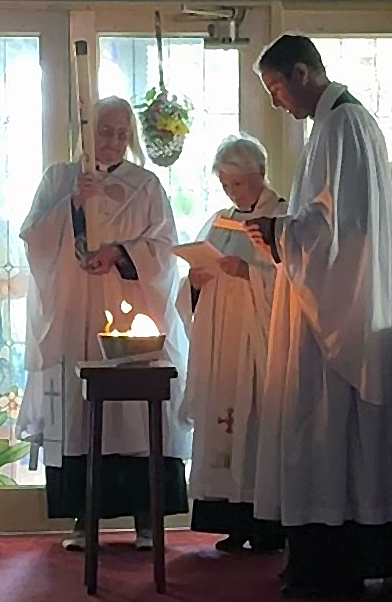
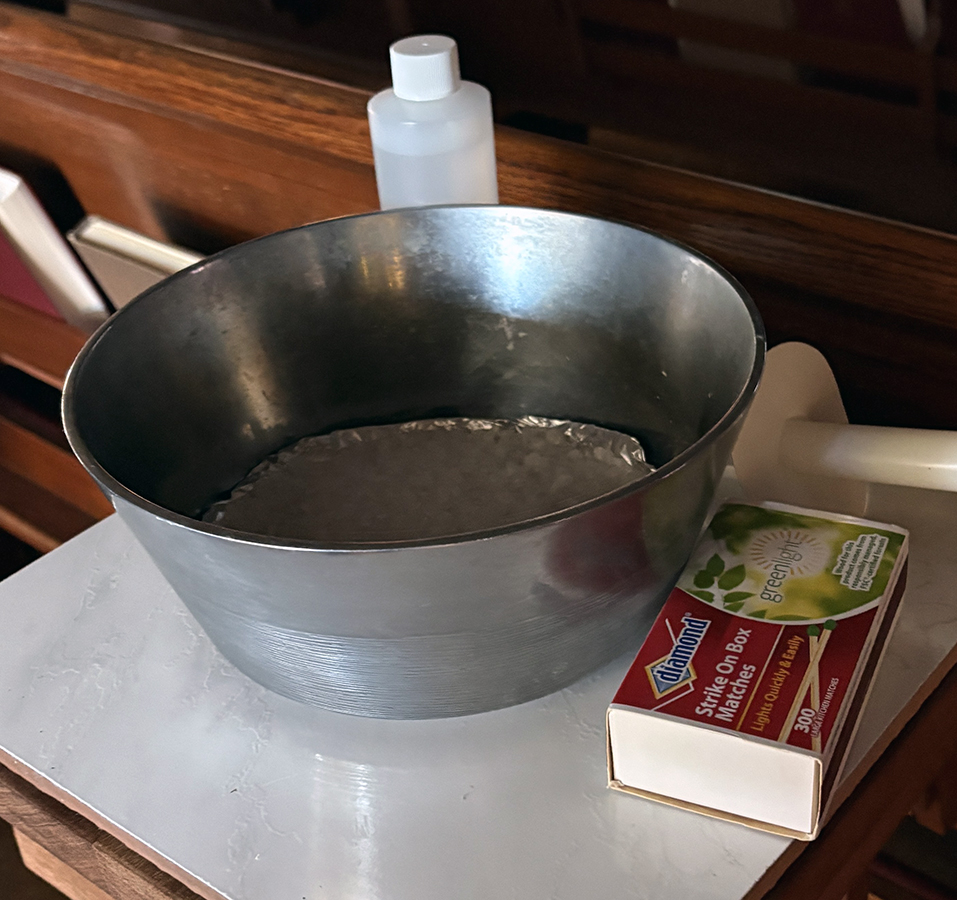
I was somewhat apprehensive about having a fire in the church, but our Verger did some research and found how we could do this safely. With all the proper safety precautions in place, a small fire was started on top of a tile-covered table at the back of the church. Once the Pascal Candle was lit, the ushers and acolytes lit their candles from the Paschal Candle and passed the flame along to parishioners who had already selected a seat. It was efficient and much less confusing than having members walk in from the garden behind the Paschal Candle and search for a seat in the darkened church.
Judy Henderson, Holy Trinity Episcopal Church, Melbourne, Florida